SLC27A4-nEDD
Previously: Ichthyosis prematurity syndrome
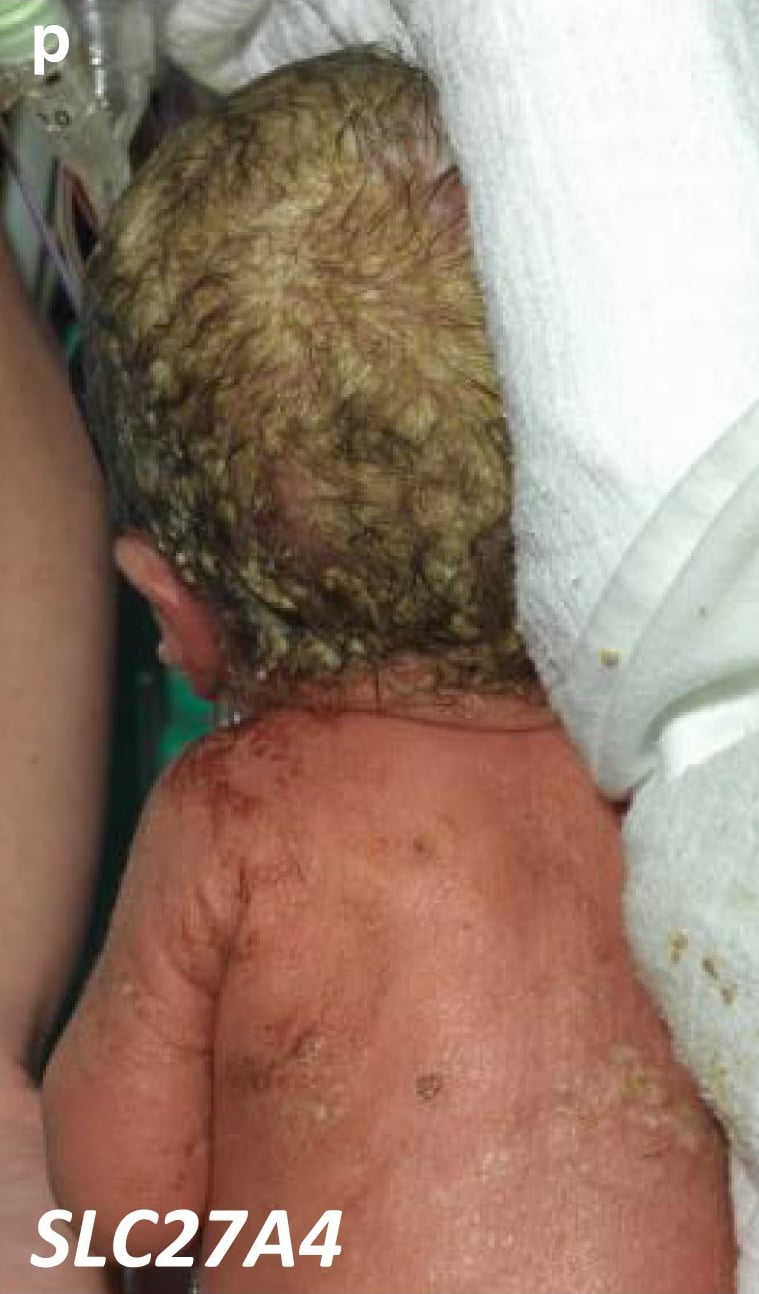
Key Clinical Clues
Thick, vernix-like covering at birth, especially on scalp, prematurity, neonatal respiratory distress, eosinophilia, persistent pruritus.
Additional Cutaneous Features
Symptoms likely secondary to massive desquamation in utero.
Additional Extracutaneous Features
Prematurity and neonatal asphyxia.
References
Klar J, Schweiger M, Zimmerman R et al. Mutations in the fatty acid transport protein 4 gene cause the ichthyosis prematurity syndrome. Am J Hum Genet 2009; 85:248-53. || Esperón-Moldes US, Ginarte M, Santamariña M et al. Novel compound heterozygous FATP4 mutations caused ichthyosis prematurity syndrome in Spanish sisters. Acta Paediatr 2019; 108:763-5. || Sobol M, Dahl N, Klar J. FATP4 missense and nonsense mutations cause similar features in ichthyosis prematurity syndrome. BMC Res Notes 2011; 4:90.
Summarised from published literature for general information. This is not medical advice, and entries are still being verified. Read the full disclaimer
Clinical Trial Opportunities
This feature is coming soon.