SPINK5-sEDD
Previously: Netherton syndrome
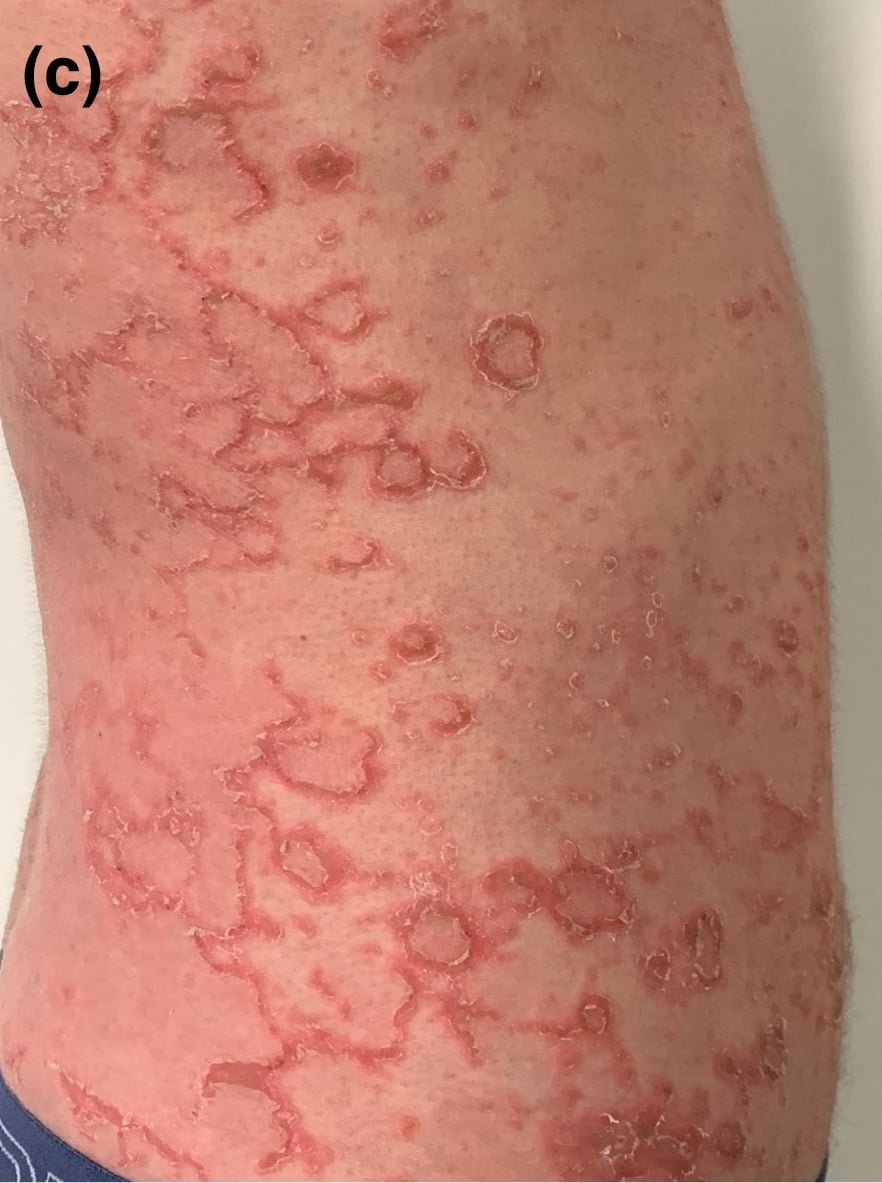
Key Clinical Clues
Erythroderma to ichthyosis linearis circumflexa (ILC); intense pruritus; sparse, brittle, breakable hair (trichorrhexis invaginata).
Additional Cutaneous Features
Most born with erythroderma and exfoliative scaling. With age, many become less erythrodermic. Papillomas (especially men and anogenital region), SCC, and BCC can occur; some harbour HPV.
Additional Extracutaneous Features
Early hypernatraemic dehydration; failure to thrive; GI complications (chronic diarrhoea, malabsorption, eosinophilic oesophagitis); atopy (asthma, allergic rhinitis, conjunctivitis, angioedema); variable immune deficiencies.
Treatment
Current: Biologics (IL-4R, IL-12/23, IL-17A), oral JAKi (Lefferdink, 2023; Luchsinger, 2020; Li, 2023). Emerging: Topical or systemic kallikrein inhibitors (Liddle, 2021), topical LEKTI protein, gene correction.
References
Bitoun E, Chavanas S, Irvine AD et al. Netherton syndrome: disease expression and spectrum of SPINK5 mutations in 21 families. J Invest Dermatol 2002; 118:352-61.
Summarised from published literature for general information. This is not medical advice, and entries are still being verified. Read the full disclaimer
Clinical Trial Opportunities
This feature is coming soon.